Reduce your time with Panduit’s RapidID

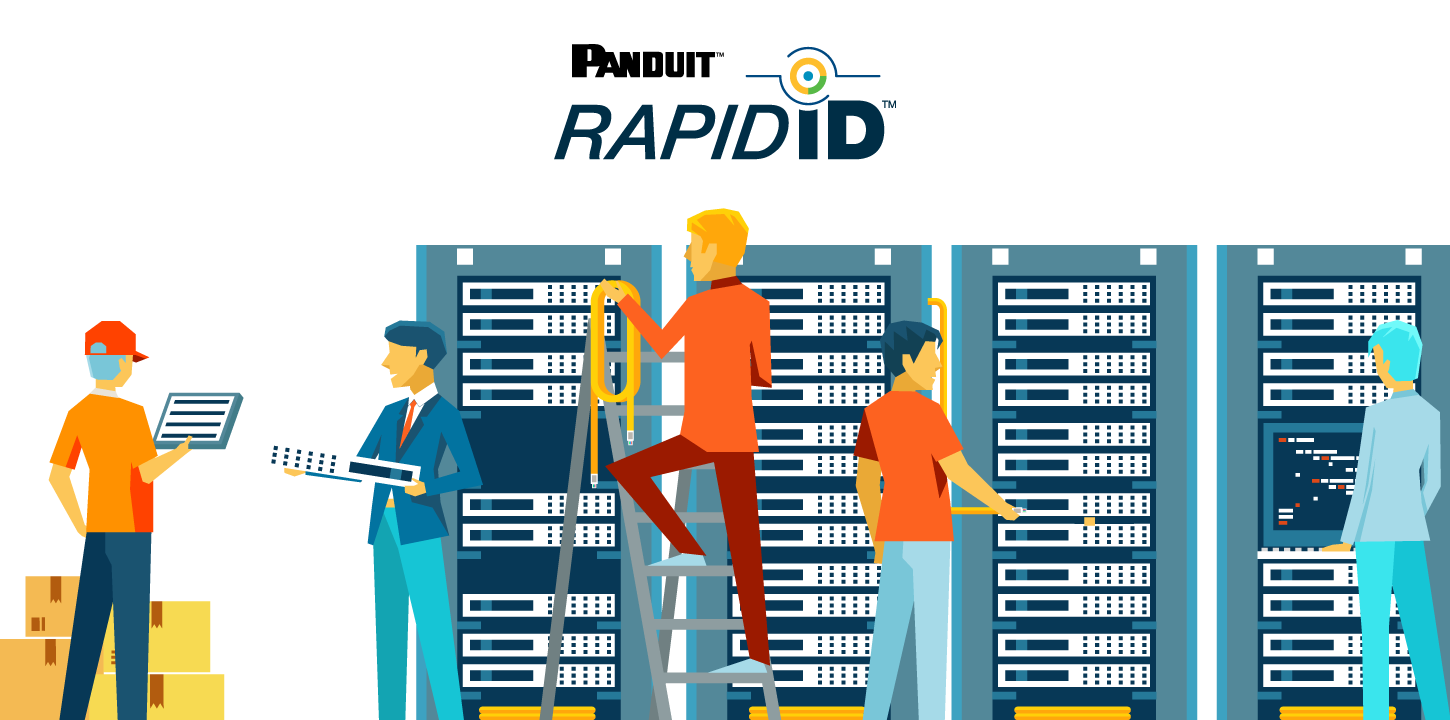
Reduce the time and cost of cable management documentation by up to 50 percent when implementing a new CED or needing to locate installed connectivity, or when replacing a network switch, thanks to the RapidID™ network mapping system.

Data center outages may happen, but they cost money! It is estimated that in the U.S. in the past year alone, 40 percent of data center outages cost between $100,000 and $1,000,000. RapidID uses pre-identified patch cords with unique barcodes to cut the installation hours required to complete a network mapping in half, and when less manpower is needed, the cost is lower.

See how RapidID works; download the infographic!

New Leviton Zigbee 3.0 socket

Leviton has introduced the new Zigbee™ 3.0 socket. The Zigbee controlled socket (ZSTLR-1HW) is compatible with a Leviton wireless controller or compatible with third-party Zigbee 3.0 to provide load control of the wireless socket.

Can be used with lamps, appliances and similar devices up to 15 A in wireless applications that require socket control or plug load control

“The Zigbee 3.0 controlled outlet brings new opportunities to our line of commercial wireless lighting control,” said Tom Leonard, vice president of Leviton. “It eliminates the pain point of pulling new cables to meet IECC, ASHRAE 90.1 requirements Users can easily install the outlet in place of traditional wall outlets and use the app to complete the configuration. Zigbee uses mesh networking technology to provide fast, reliable and secure communications.

The Zigbee controlled socket is Zigbee 3.0 certified and requires a Leviton environment controller to operate. It works in conjunction with the GreenMAX DRC wireless keypad room controller, Lumina RF wireless keypad room controller or a Zigbee 3.0-compatible hub, gateway or controller with proper integration.

The upper outlet of the socket is always on and the lower outlet is controlled. The outlet control strategies use occupancy detection or program-based control to energize and de-energize a controlled outlet based on occupancy or time of day. There is also an LED light that indicates when the controlled switch is on or off.

The Zigbee controlled receptacle is tamper-proof (TR) and meets NEC 2020 code requirements. The socket can be used as a component in a system to meet energy code requirements for IECC, ASHRAE 90.1, dimming, manual on/off, presence/absence control, and automatic shutdown .

Reduce your time with Panduit’s RapidID

Reduce the time and cost of cable management documentation by up to 50 percent when implementing a new CED or needing to locate installed connectivity, or when replacing a network switch, thanks to the RapidID™ network mapping system.

Data center outages may happen, but they cost money! It is estimated that in the U.S. in the past year alone, 40 percent of data center outages cost between $100,000 and $1,000,000. RapidID uses pre-identified patch cords with unique barcodes to cut the installation hours required to complete a network mapping in half, and when less manpower is needed, the cost is lower.

See how RapidID works; download the infographic!

History of Ethernet cables

Millennials who entered the workforce between 2003 and 2016 are used to the digital age: high-speed Internet access, smartphones, online everything. And while they have certainly experienced technological advances throughout their lives, they may not be aware of how far copper Ethernet cabling has come to make it all possible. The following is a small history lesson in Ethernet for the younger generation and a walk down memory lane for those who have been in the industry a little longer.

Explanation of categories of Ethernet cables The first version, 10BASE5, featured an extremely stiff cable nearly half an inch in diameter, and was later joined by 10BASE2, using cable half as thick and much more flexible. In the late 1980s, the development of the Ethernet hub, and later the switch, allowed twisted-pair copper cables to become the primary means of supporting Ethernet.

Categories 3, 4 and 5

In 1989, Anixter, a distributor of cabling products, introduced the “Levels” program, the first written performance specification for data cabling systems. This became the basis for the first category cable based on official standards, ratified in 1991 by the Telecommunications Industry Association (TIA)as Category 3. It supported 10 Mb/s (on two of the four pairs in a Category 3 cable) and paved the way for the evolution of twisted-pair category cables over the next 30 years. Although no longer recommended by industry standards, Category 3 still has an installed base in some commercial buildings for voice. (In some of these earlier installations, you will find that two pairs are used for data and the other pairs are used for another connection or voice pair.) After Category 3, Category 4 was around for a moment, then quickly replaced for Category 5, both now defunct and no longer recognized in cabling standards.

Categories 5e and 6

Around 2001, Category 5e arrived with better crosstalk performance to support gigabit speeds. Then came Category 6 with a bit more headroom, allowing it to support 10 Gb/s, but only up to 35 meters. With qualification testing, some installed bases of Category 5e and Category 6 cables can support 2.5 and/or 5 Gb/s to 100 meters for Wi-Fi 6 deployments, with the potential to support 10 Gb/s to 55 meters or less.

Category 6A

Category 6A, capable of supporting from 10 Gb/sa 100 meters, was ratified in 2009. It remains the recommended medium for all new horizontal LAN deployments. Although it has been around for more than a decade now, Category 6A was perhaps a bit ahead of its time; only in the last five years have common LAN applications required speeds of 10 Gb/s at the end device, and there are still many that operate at 1000 Mb/s or less.

Categories 7, 7A and 8

Potresti anche essere curioso della Categoria 7 e della Categoria 7A, ratificato da ISO/IEC rispettivamente nel 2002 e nel 2010. Sebbene non sia mai stata ufficialmente riconosciuta dal TIA, la Categoria 7A rimane un popolare supporto di cablaggio preferito per supportare 10 Gb/s in alcune parti d’Europa. Poi c’è la Categoria 8, che ha avuto molto clamore come soluzione per supportare 25 e 40 Gb/s in collegamenti da switch a server di data center di 30 metri ma non è del tutto decollata: il consumo di energia è rimasto un problema per 25 /Apparecchiature attive 40GBASE-T. I progressi nella tecnologia del ricetrasmettitore ora consentono anche ai data center di supportare facilmente collegamenti switch-to-server da 25 e 50 Gb/s utilizzando cavi ad attacco diretto SFP28 o SFP56 in configurazioni top-of-rack (ToR) a portata corta o gruppi ottici attivi e fibra cablaggio strutturato in collegamenti più lunghi. Ciò non significa necessariamente che la categoria 8 sia morta.

Reduce your time with Panduit’s RapidID

Reduce the time and cost of cable management documentation by up to 50 percent when implementing a new CED or needing to locate installed connectivity, or when replacing a network switch, thanks to the RapidID™ network mapping system.

Data center outages may happen, but they cost money! It is estimated that in the U.S. in the past year alone, 40 percent of data center outages cost between $100,000 and $1,000,000. RapidID uses pre-identified patch cords with unique barcodes to cut the installation hours required to complete a network mapping in half, and when less manpower is needed, the cost is lower.

See how RapidID works; download the infographic!

New Leviton Zigbee 3.0 socket

Leviton has introduced the new Zigbee™ 3.0 socket. The Zigbee controlled socket (ZSTLR-1HW) is compatible with a Leviton wireless controller or compatible with third-party Zigbee 3.0 to provide load control of the wireless socket.

Can be used with lamps, appliances and similar devices up to 15 A in wireless applications that require socket control or plug load control

“The Zigbee 3.0 controlled outlet brings new opportunities to our line of commercial wireless lighting control,” said Tom Leonard, vice president of Leviton. “It eliminates the pain point of pulling new cables to meet IECC, ASHRAE 90.1 requirements Users can easily install the outlet in place of traditional wall outlets and use the app to complete the configuration. Zigbee uses mesh networking technology to provide fast, reliable and secure communications.

The Zigbee controlled socket is Zigbee 3.0 certified and requires a Leviton environment controller to operate. It works in conjunction with the GreenMAX DRC wireless keypad room controller, Lumina RF wireless keypad room controller or a Zigbee 3.0-compatible hub, gateway or controller with proper integration.

The upper outlet of the socket is always on and the lower outlet is controlled. The outlet control strategies use occupancy detection or program-based control to energize and de-energize a controlled outlet based on occupancy or time of day. There is also an LED light that indicates when the controlled switch is on or off.

The Zigbee controlled receptacle is tamper-proof (TR) and meets NEC 2020 code requirements. The socket can be used as a component in a system to meet energy code requirements for IECC, ASHRAE 90.1, dimming, manual on/off, presence/absence control, and automatic shutdown .

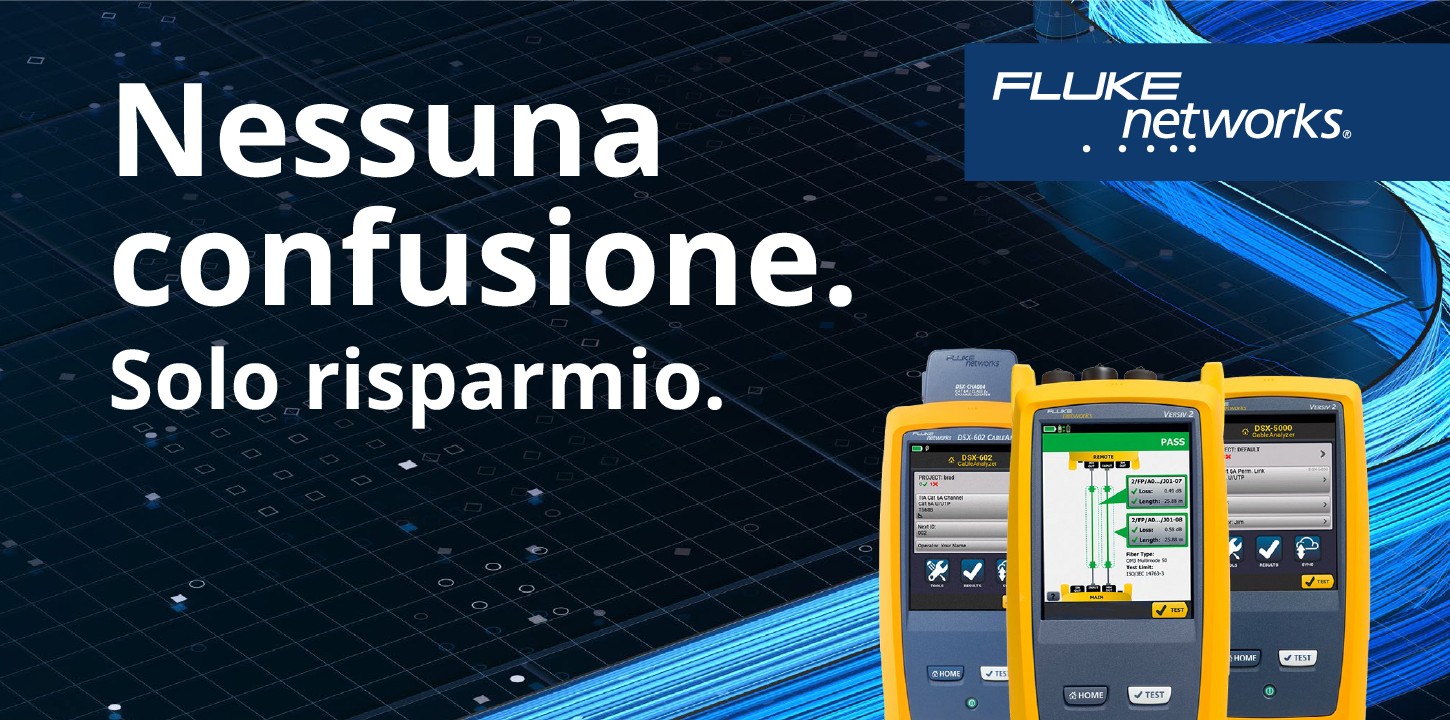
No confusion, just saving money

Through December 31, 2022 Fluke Networks is allowing you to save up to $4000 on a selection of copper and fiber test tools for a limited time only! The new “No Fuss, Only Savings” campaign makes strong price reductions available on 10 selected items and requires no trade-in, no return shipping and no registration…no hassle!

Select your model, contact us for the extra discount and enjoy the instant savings

ModelloListino luglio 2022Listino da agosto a dicembre 2022
DSX-602 PROx.xxx €x.xxx €
DSX2-5000x.xxx €x.xxx €
DSX2-5000/GLDx.xxx €x.xxx €
DSX2-5000QIx.xxx €x.xxx €
DSX2-5000QI/GLDx.xxx €x.xxx €
DSX2-8000x.xxx €x.xxx €
DSX2-8000/GLDx.xxx €x.xxx €
CFP2-100-Qx.xxx €x.xxx €
CFP2-100-Q/GLDx.xxx €x.xxx €
CFP2-100-QIx.xxx €x.xxx €

Since 1992 Fluke Networks has been providing installers and network technicians around the world with accurate, fast, reliable, and easy-to-use cable certification testers.

Join us to celebrate Fluke Networks’ 30th anniversary by saving money on industry-leading testing and certification tools.