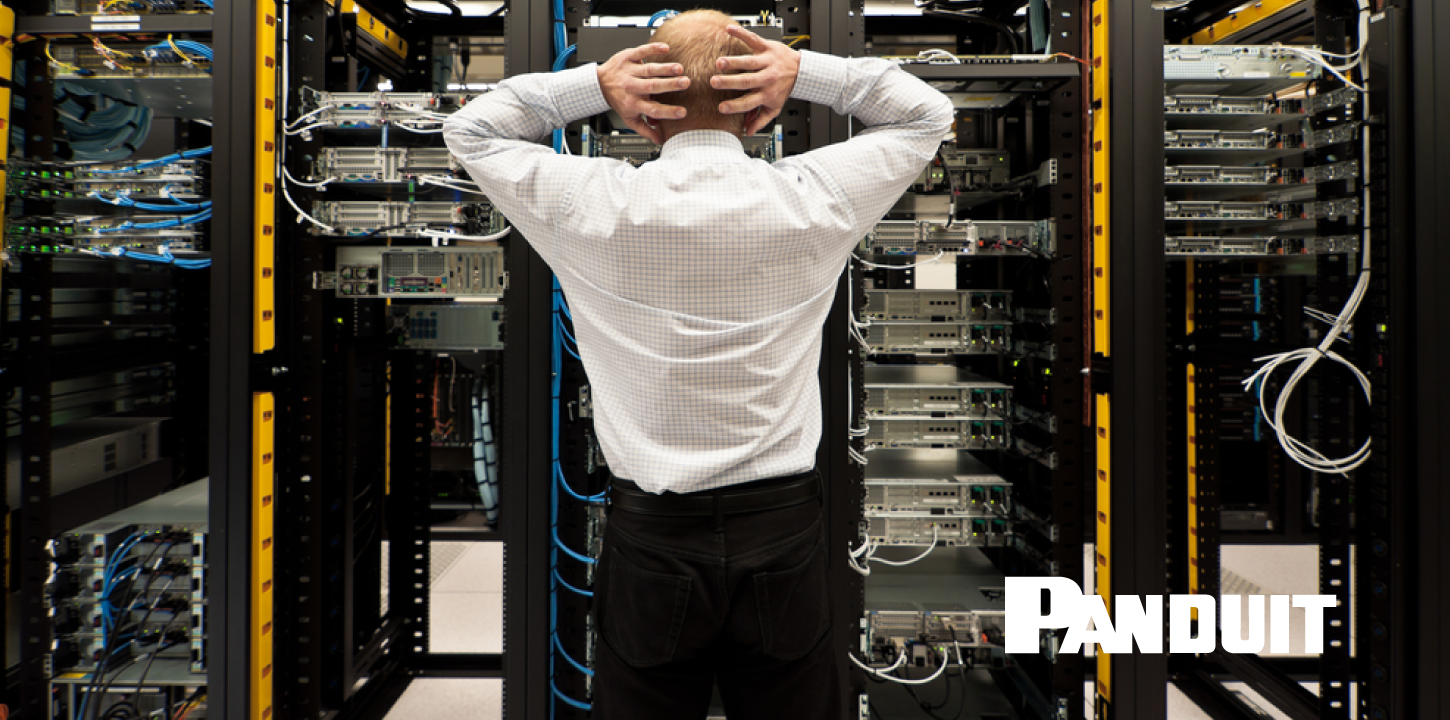
If the data center does not have sufficient Failover

The near-insatiable global demand for energy, combined with failures to adequately invest in grid infrastructure and power generation, has increased the challenges facing the data center industry.

In addition, the push for net zero and operators’ promises to power data centers with renewable energy means that many now rely on energy-matching tools to deliver on their promises. That’s because using renewable energy 24/7 100% of the time requires sourcing power from different sources, including wind and solar, none of which can guarantee a constant supply. The time between the grid power outage and the handover of the IT load to the UPS is critical, and every millisecond counts Michael Akinla, business manager at Panduit.

Data center failures following outages demonstrate that when power fails unexpectedly and backup processes are insufficient, the results can be catastrophic. However, understanding the key variables and specific objectives for individual data center operators or customer needs will provide a clear decision-making process to prevent the organization from coming to a standstill due to a power outage.

Uninterruptible power supplies (UPS) are one of the key elements in any environment where uninterrupted power supply to electrical equipment, including IT equipment, is mission critical.

According to MarketWatch , between 2019 and 2025 the UPS market will grow to $13 billion , a CAGR of 3.98 percent. Even countries such as the United Kingdom, which have highly secure power grids, will experience occasional major power outages, such as the ‘national grid outage in 2019, or this one in London in March 2022 , caused by an electrical substation fire.

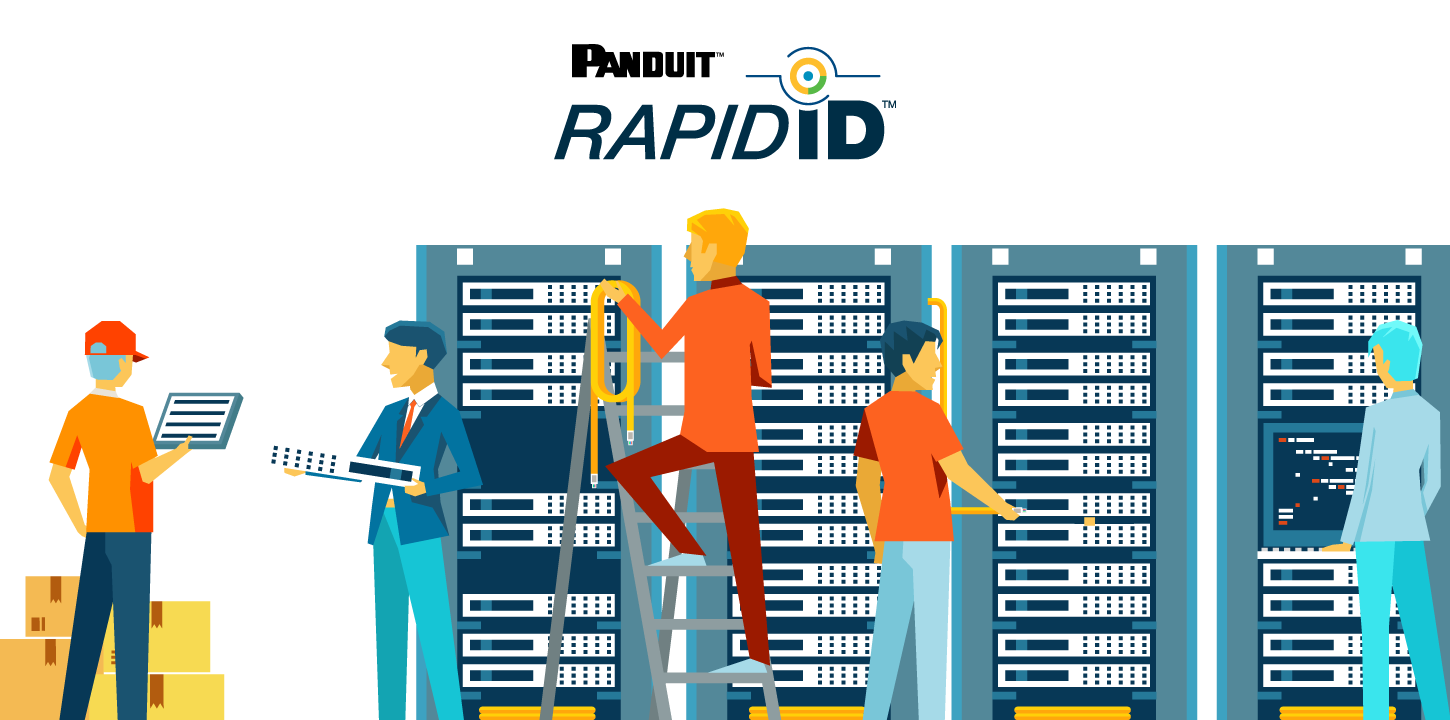
Reduce your time with Panduit’s RapidID

Reduce the time and cost of cable management documentation by up to 50 percent when implementing a new CED or needing to locate installed connectivity, or when replacing a network switch, thanks to the RapidID™ network mapping system.

Data center outages may happen, but they cost money! It is estimated that in the U.S. in the past year alone, 40 percent of data center outages cost between $100,000 and $1,000,000. RapidID uses pre-identified patch cords with unique barcodes to cut the installation hours required to complete a network mapping in half, and when less manpower is needed, the cost is lower.

See how RapidID works; download the infographic!

New Leviton Zigbee 3.0 socket

Leviton has introduced the new Zigbee™ 3.0 socket. The Zigbee controlled socket (ZSTLR-1HW) is compatible with a Leviton wireless controller or compatible with third-party Zigbee 3.0 to provide load control of the wireless socket.

Can be used with lamps, appliances and similar devices up to 15 A in wireless applications that require socket control or plug load control

“The Zigbee 3.0 controlled outlet brings new opportunities to our line of commercial wireless lighting control,” said Tom Leonard, vice president of Leviton. “It eliminates the pain point of pulling new cables to meet IECC, ASHRAE 90.1 requirements Users can easily install the outlet in place of traditional wall outlets and use the app to complete the configuration. Zigbee uses mesh networking technology to provide fast, reliable and secure communications.

The Zigbee controlled socket is Zigbee 3.0 certified and requires a Leviton environment controller to operate. It works in conjunction with the GreenMAX DRC wireless keypad room controller, Lumina RF wireless keypad room controller or a Zigbee 3.0-compatible hub, gateway or controller with proper integration.

The upper outlet of the socket is always on and the lower outlet is controlled. The outlet control strategies use occupancy detection or program-based control to energize and de-energize a controlled outlet based on occupancy or time of day. There is also an LED light that indicates when the controlled switch is on or off.

The Zigbee controlled receptacle is tamper-proof (TR) and meets NEC 2020 code requirements. The socket can be used as a component in a system to meet energy code requirements for IECC, ASHRAE 90.1, dimming, manual on/off, presence/absence control, and automatic shutdown .

Reduce your time with Panduit’s RapidID

Reduce the time and cost of cable management documentation by up to 50 percent when implementing a new CED or needing to locate installed connectivity, or when replacing a network switch, thanks to the RapidID™ network mapping system.

Data center outages may happen, but they cost money! It is estimated that in the U.S. in the past year alone, 40 percent of data center outages cost between $100,000 and $1,000,000. RapidID uses pre-identified patch cords with unique barcodes to cut the installation hours required to complete a network mapping in half, and when less manpower is needed, the cost is lower.

See how RapidID works; download the infographic!

Sustainability and Fiber

With sustainability and environmental issues at the forefront, individuals and companies are doing what they can to limit their environmental impact and reduce their carbon footprint. Although many people are more aware of how their actions affect the environment, there are things we still take for granted or don’t think about. One of these areas is the wiring infrastructure.

Are you thinking of tearing out your old multi-mode fiber backbone and replacing it with single-mode fiber?

Think again. What will you do with the multimode fiber cabling you remove from your building? After you pull out the old multimode fiber, you might throw it away, along with the other waste and leftover materials created by the rip-and-replace project. All that multimode fiber will then end up in a landfill, and here’s the problem: No one knows how long multimode fiber will take to decompose. Some think it could take hundreds of years.

Recycling as an option

Can multimode optical fiber be recycled?
It depends on where the project is geographically located as it requires a specialized recycler. It is not as simple as throwing multimode fiber in the blue bin and expecting it to be recycled. The exact amount of recyclable cable depends on the composition of the cable. The cable sheathing and armor can be ground up and recycled, but what about the Kevlar® reinforcement wires? Although some of the multimode cable components can be recycled, not all of them can be.

When it comes to sustainability, ripping out the old multi-mode fiber and replacing it with single-mode fiber is not very sustainable.

The most sustainable approach

There is a sustainable alternative to tearing and replacing existing multimode fiber: OneMode™.

Panduit’s OneMode offering is a device that allows single-mode optical modules to be used with an existing multimode fiber backbone. OneMode works by shaping the single-mode laser light so that when it is launched into the multimode fiber backbone, it uses only the fundamental mode of the fiber. This means that the multimode fiber behaves as if it were a single-mode fiber. All the modal and chromatic dispersion limitations that exist with multimode fiber disappear.

Installation is quick and simple. OneMode deployment requires only access to the ends of the legacy multimode fiber. Fiber can be upgraded in a few hours with minimal disruption to operations. Because OneMode takes much less time than a rip-and-replace design, it is less expensive to deploy.

OneMode is the sustainable, environmentally friendly and economical way to upgrade your existing multi-mode fiber backbone.

Learn more about how this solution could work in your facility at www.panduit.com/onemode . Or contact your ASIT salesperson for more information.

Are you ready for the school of the future?

The PNRR for Schools aims to accelerate the digital transition process of Italian schools in all different dimensions and align it with the priorities of the European Union.

Investment 3.2 “School 4.0 – Innovative Schools, New Classrooms and Laboratories” provides €2.1 million in funding for the transformation of 100,000 classrooms into innovative learning environments and the creation of laboratories for the digital professions of the future, in synergy with the €900 million in REACT EU structural funds currently being implemented for the wiring of school buildings and the educational and administrative digitization of schools.

2.1 million for transformation

The NRP’s “School 4.0” investment line involves all state schools and aims to transform the environments where curricular teaching takes place (at least 100,000 classrooms) with advanced digital equipment and to equip schools in the second cycle of education with advanced laboratories for learning the digital professions of the future.

History of Ethernet cables

Millennials who entered the workforce between 2003 and 2016 are used to the digital age: high-speed Internet access, smartphones, online everything. And while they have certainly experienced technological advances throughout their lives, they may not be aware of how far copper Ethernet cabling has come to make it all possible. The following is a small history lesson in Ethernet for the younger generation and a walk down memory lane for those who have been in the industry a little longer.

Explanation of categories of Ethernet cables The first version, 10BASE5, featured an extremely stiff cable nearly half an inch in diameter, and was later joined by 10BASE2, using cable half as thick and much more flexible. In the late 1980s, the development of the Ethernet hub, and later the switch, allowed twisted-pair copper cables to become the primary means of supporting Ethernet.

Categories 3, 4 and 5

In 1989, Anixter, a distributor of cabling products, introduced the “Levels” program, the first written performance specification for data cabling systems. This became the basis for the first category cable based on official standards, ratified in 1991 by the Telecommunications Industry Association (TIA)as Category 3. It supported 10 Mb/s (on two of the four pairs in a Category 3 cable) and paved the way for the evolution of twisted-pair category cables over the next 30 years. Although no longer recommended by industry standards, Category 3 still has an installed base in some commercial buildings for voice. (In some of these earlier installations, you will find that two pairs are used for data and the other pairs are used for another connection or voice pair.) After Category 3, Category 4 was around for a moment, then quickly replaced for Category 5, both now defunct and no longer recognized in cabling standards.

Categories 5e and 6

Around 2001, Category 5e arrived with better crosstalk performance to support gigabit speeds. Then came Category 6 with a bit more headroom, allowing it to support 10 Gb/s, but only up to 35 meters. With qualification testing, some installed bases of Category 5e and Category 6 cables can support 2.5 and/or 5 Gb/s to 100 meters for Wi-Fi 6 deployments, with the potential to support 10 Gb/s to 55 meters or less.

Category 6A

Category 6A, capable of supporting from 10 Gb/sa 100 meters, was ratified in 2009. It remains the recommended medium for all new horizontal LAN deployments. Although it has been around for more than a decade now, Category 6A was perhaps a bit ahead of its time; only in the last five years have common LAN applications required speeds of 10 Gb/s at the end device, and there are still many that operate at 1000 Mb/s or less.

Categories 7, 7A and 8

Potresti anche essere curioso della Categoria 7 e della Categoria 7A, ratificato da ISO/IEC rispettivamente nel 2002 e nel 2010. Sebbene non sia mai stata ufficialmente riconosciuta dal TIA, la Categoria 7A rimane un popolare supporto di cablaggio preferito per supportare 10 Gb/s in alcune parti d’Europa. Poi c’è la Categoria 8, che ha avuto molto clamore come soluzione per supportare 25 e 40 Gb/s in collegamenti da switch a server di data center di 30 metri ma non è del tutto decollata: il consumo di energia è rimasto un problema per 25 /Apparecchiature attive 40GBASE-T. I progressi nella tecnologia del ricetrasmettitore ora consentono anche ai data center di supportare facilmente collegamenti switch-to-server da 25 e 50 Gb/s utilizzando cavi ad attacco diretto SFP28 o SFP56 in configurazioni top-of-rack (ToR) a portata corta o gruppi ottici attivi e fibra cablaggio strutturato in collegamenti più lunghi. Ciò non significa necessariamente che la categoria 8 sia morta.

If the data center does not have sufficient Failover

The near-insatiable global demand for energy, combined with failures to adequately invest in grid infrastructure and power generation, has increased the challenges facing the data center industry.

In addition, the push for net zero and operators’ promises to power data centers with renewable energy means that many now rely on energy-matching tools to deliver on their promises. That’s because using renewable energy 24/7 100% of the time requires sourcing power from different sources, including wind and solar, none of which can guarantee a constant supply. The time between the grid power outage and the handover of the IT load to the UPS is critical, and every millisecond counts Michael Akinla, business manager at Panduit.

Data center failures following outages demonstrate that when power fails unexpectedly and backup processes are insufficient, the results can be catastrophic. However, understanding the key variables and specific objectives for individual data center operators or customer needs will provide a clear decision-making process to prevent the organization from coming to a standstill due to a power outage.

Uninterruptible power supplies (UPS) are one of the key elements in any environment where uninterrupted power supply to electrical equipment, including IT equipment, is mission critical.

According to MarketWatch , between 2019 and 2025 the UPS market will grow to $13 billion , a CAGR of 3.98 percent. Even countries such as the United Kingdom, which have highly secure power grids, will experience occasional major power outages, such as the ‘national grid outage in 2019, or this one in London in March 2022 , caused by an electrical substation fire.

Sustainability and fiber

With sustainability and environmental issues at the forefront, individuals and companies are doing what they can to limit their environmental impact and reduce their carbon footprint. Although many people are more aware of how their actions affect the environment, there are things we still take for granted or don’t think about. One of these areas is the wiring infrastructure.

Are you thinking of tearing out your old multi-mode fiber backbone and replacing it with single-mode fiber?

Think again. What will you do with the multimode fiber cabling you remove from your building? After you pull out the old multimode fiber, you might throw it away, along with the other waste and leftover materials created by the rip-and-replace project. All that multimode fiber will then end up in a landfill, and here’s the problem: No one knows how long multimode fiber will take to decompose. Some think it could take hundreds of years.

Recycling as an option

Can multimode optical fiber be recycled?
It depends on where the project is geographically located as it requires a specialized recycler. It is not as simple as throwing multimode fiber in the blue bin and expecting it to be recycled. The exact amount of recyclable cable depends on the composition of the cable. The cable sheathing and armor can be ground up and recycled, but what about the Kevlar® reinforcement wires? Although some of the multimode cable components can be recycled, not all of them can be.

When it comes to sustainability, ripping out the old multi-mode fiber and replacing it with single-mode fiber is not very sustainable.

The most sustainable approach

There is a sustainable alternative to tearing and replacing existing multimode fiber: OneMode™.

Panduit’s OneMode offering is a device that allows single-mode optical modules to be used with an existing multimode fiber backbone. OneMode works by shaping the single-mode laser light so that when it is launched into the multimode fiber backbone, it uses only the fundamental mode of the fiber. This means that the multimode fiber behaves as if it were a single-mode fiber. All the modal and chromatic dispersion limitations that exist with multimode fiber disappear.

Installation is quick and simple. OneMode deployment requires only access to the ends of the legacy multimode fiber. Fiber can be upgraded in a few hours with minimal disruption to operations. Because OneMode takes much less time than a rip-and-replace design, it is less expensive to deploy.

OneMode is the sustainable, environmentally friendly and economical way to upgrade your existing multi-mode fiber backbone.

Learn more about how this solution could work in your facility at www.panduit.com/onemode . Or contact your ASIT salesperson for more information.

Reduce your time with Panduit’s RapidID

Reduce the time and cost of cable management documentation by up to 50 percent when implementing a new CED or needing to locate installed connectivity, or when replacing a network switch, thanks to the RapidID™ network mapping system.

Data center outages may happen, but they cost money! It is estimated that in the U.S. in the past year alone, 40 percent of data center outages cost between $100,000 and $1,000,000. RapidID uses pre-identified patch cords with unique barcodes to cut the installation hours required to complete a network mapping in half, and when less manpower is needed, the cost is lower.

See how RapidID works; download the infographic!